
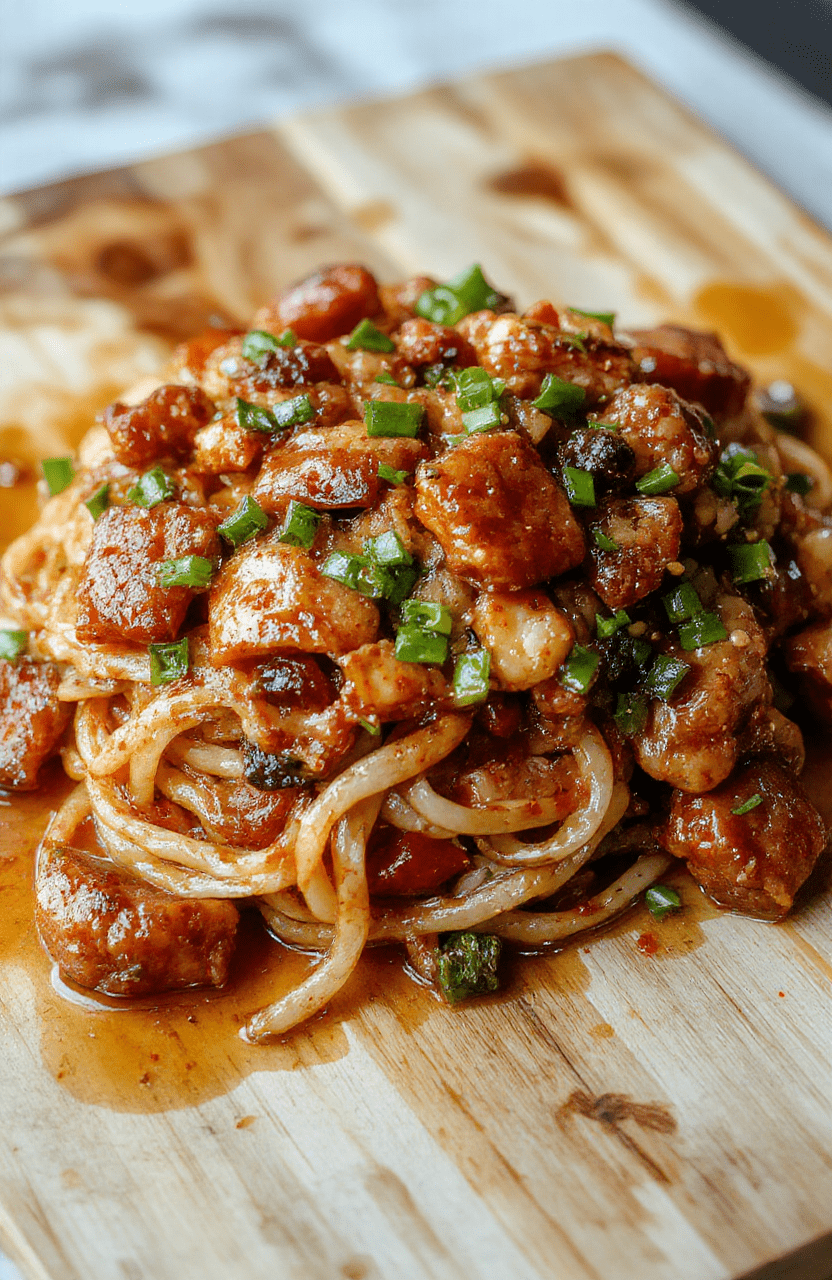
🌶️🔥 Spicy, Crispy, & Irresistibly Savory: Kung Pao Noodles That Taste Like Beijing Street Food
1. Introduction
There’s something magical about the sizzle of garlic and ginger hitting hot oil—followed by the punch of Sichuan peppercorns and the comforting familiarity of tender noodles tossed with crisp vegetables and juicy chicken. This kung pao noodles recipe delivers that iconic Sichuan flavor profile at home: fiery, numbing, sweet, and tangy—all in one wok.]
Unlike takeout’s soggy noodles, this version stays al dente and glossy, coated in a rich, glossy sauce that clings just right. And yes—it’s ready in under 30 minutes! If you love bold, layered flavors, you’ll adore how this dish balances heat with honey and rice vinegar. It’s a perfect weeknight win, especially after trying my Easy Buffalo Chicken Sliders or my game-day favorite Super Bowl Appetizers!
2. Why You’ll Love This Recipe
- Ready in 25 minutes—faster than delivery and more delicious.
- One-wok meal: minimal cleanup, maximum flavor.
- Highly customizable: Swap in veggies you have on hand or go plant-based.
- Restaurant-level taste—thanks to the Sichuan peppercorn “mala” magic.
- Leftovers reheat beautifully, making it perfect for meal prep.
3. Ingredient Notes
Great kung pao noodles start with quality, intentional ingredients. Don’t skip the Sichuan peppercorns—their citrusy, tingling warmth defines the dish (but if you can’t find them, see the variations section).
Pro tips for shopping: Look for dried Sichuan peppercorns, not red pepper flakes—they’re different! Toast and grind them fresh for maximum aroma. For the chicken, thigh meat stays juicier than breast when stir-fried, and I recommend boneless, skinless thighs cut into ¾-inch cubes. And while regular soy sauce works, light soy sauce adds saltiness without darkening the sauce too much.
Don’t forget the dry sherry or Shaoxing wine—it deepens umami and cuts through richness. If you’re out, sub with dry white wine or a splash of rice wine vinegar mixed with water. And for the noodles, lo mein or egg noodles (fresh or dried) work best. Rice noodles can be used, but they’re more delicate and cook faster.
4. Kitchen Tools You Need
Stir-frying is all about heat control and speed—your tools make all the difference. A good wok or heavy skillet is non-negotiable, and the T-fal 14-Piece Hard Anodized Nonstick Cookware Set includes a perfect 12-inch wok pan with a helpings lid—ideal for quick prep and serving.
Ninja Air Fryer Pro Crisp & Roast 4-in-1 makes perfect roasted peanuts in minutes (no burning!), and the Philips 7000 Series Pasta Maker lets you craft fresh egg noodles if you’re feeling ambitious (and I promise, the difference is magical in this dish!).
For organization, the Fullstar Ultimate Veggie Prep Master lets you slice bell peppers and scallions in seconds—no more tears or uneven cuts. Finally, store leftovers in the JoyJolt Airtight Glass Food Storage Set for stress-free fridge life (and no plastic smells!).
5. How to Make Kung Pao Noodles
Phase 1: Prep & Marinate (10 minutes)
Begin by toasting the Sichuan peppercorns in a dry skillet over low heat until fragrant (about 2 minutes). Let cool, then finely crush with a mortar and pestle or spice grinder—this releases their signature aroma. Set aside.
In a bowl, marinate 1 lb boneless chicken thighs with 1 tbsp light soy sauce, 1 tsp Shaoxing wine, 1 tsp cornstarch, and a pinch of black pepper. While it rests, prep your veggies: 1 red bell pepper (sliced), 1 green bell pepper (sliced), ½ cup julienned carrots, and 4 scallions (white and green parts separated).
In a small bowl, whisk together 3 tbsp light soy sauce, 1.5 tbsp dry sherry, 2 tbspChinese black vinegar (or sub rice vinegar + splash of molasses), 1 tbsp honey, 1 tsp sesame oil, and 1 tsp cornstarch. Set aside—this is your sauce.
Phase 2: Stir-Fry Like a Pro (10 minutes)
Heat 2 tbsp neutral oil in your wok or heavy skillet over medium-high heat until smoking. Add chicken and stir-fry 3–4 minutes, breaking up chunks until golden. Remove and set aside.
In the same wok, add 1 tbsp oil. Sauté 1 tbsp minced ginger, 3 minced garlic cloves, and the white parts of scallions for 30 seconds—just until fragrant (don’t brown!). Add the dried chilies (20–30 whole, deseeded for less heat) and stir 15 seconds.
Pour in the sauce—it will thicken instantly. Add noodles (pre-cooked and drained), chicken, vegetables, and half the toasted Sichuan peppercorns. Toss vigorously for 1–2 minutes until noodles are glossy and evenly coated. The sauce should be glossy and clinging, not watery.
Phase 3: Finish & Serve (2 minutes)
Turn off heat. Stir in the green scallion parts and reserved peanuts (1/2 cup roasted, unsalted). Taste—adjust with a splash of vinegar if it needs brightness. Serve immediately over steamed jasmine rice or enjoy as-is for a lighter meal.
6. Expert Tips for Success
Don’t overcrowd the wok—cook chicken in batches if needed. Too much moisture = steamed, not seared.
Prep everything before cooking (Mise en Place). Stir-fry moves fast—once you start, there’s no time to chop.
For authentic texture, undercook noodles by 1 minute (especially dried egg noodles). They’ll finish cooking in the wok with residual heat.
Control the heat: Too hot = burnt garlic/Sichuan pepper. Too low = soggy, greasy noodles. Aim for a steady medium-high.
Want less numbing? Reduce Sichuan peppercorns to 1 tsp or omit chilies—but I promise, the tingling “mala” balance is what makes this dish unforgettable!
7. Variations & Substitutions
Vegetarian/Vegan? Swap chicken for extra-firm tofu (pressed & cubed) or seitan. Use tamari instead of soy sauce and agave for honey.
Gluten-free? Use tamari and rice noodles (reduce stir-fry time by 1 minute).
No Sichuan peppercorns? Mix 1 tsp crushed coriander seeds + ¼ tsp black pepper for a similar earthy warmth (though it won’t tingle).
Extra veggies? Bok choy, sugar snap peas, or shiitake mushrooms all shine here. Add delicategreens (like bok choy) at the end.
Too spicy? Remove the chili seeds before toasting, or use ½ the amount. Balance with extra honey.
8. Storage & Reheating
Cool completely and store in an airtight glass container for up to 4 days. Noodles absorb sauce over time—add a splash of water or broth when reheating.
Reheat stovetop in a wok over medium heat with 1 tsp oil. Stir continuously until steaming hot. Avoid microwaving—it turns noodles rubbery.
Freezing? Freeze just the cooked chicken and sauce (not noodles) for up to 3 months. Cook fresh noodles and combine upon reheating.
9. FAQ
Q: Can I make kung pao noodles without a wok?
A: Yes! Use a large, heavy skillet (cast iron or stainless steel). Preheat it well, and work in batches to avoid steaming.
Q: Why is my sauce watery?
A: Add ½ tsp extra cornstarch slurry (cornstarch + cold water) and stir 30 seconds after mixing in the sauce. Heat should be high, and don’t add too much liquid.
Q: What’s the best substitute for Chinese black vinegar?
A: Mix 1 tbsp rice vinegar + ½ tsp molasses + ¼ tsp balsamic vinegar. It mimics the complex tang and sweetness.
Q: Are Sichuan peppercorns the same as chili peppers?
A: Absolutely not! They’re the berries of a prickly ash tree and impart a numbing, citrusy effect—chilies provide heat. Both are essential for authenticity.
10. Conclusion
This kung pao noodles recipe brings the bold, balanced magic of Sichuan street food straight to your kitchen—without the delivery fee (or the wait!). With its crispy-tender noodles, juicy chicken, and that legendary tingling finish, it’s become my go-to date-night dinner or crowd-pleasing potluck star.
Pair it with my Sweet & Spicy Honey PepperChicken for a full flavor journey, or dip into one of my comfort classics like the Dump-and-Go Smothered Pork Chops on a chill evening.
Don’t forget to pin, share, or tag me if you try it—I love seeing your recreations! And if you crave more sweet endings, my Ultimate Moist Chocolate Banana Bread might just steal the show.
Print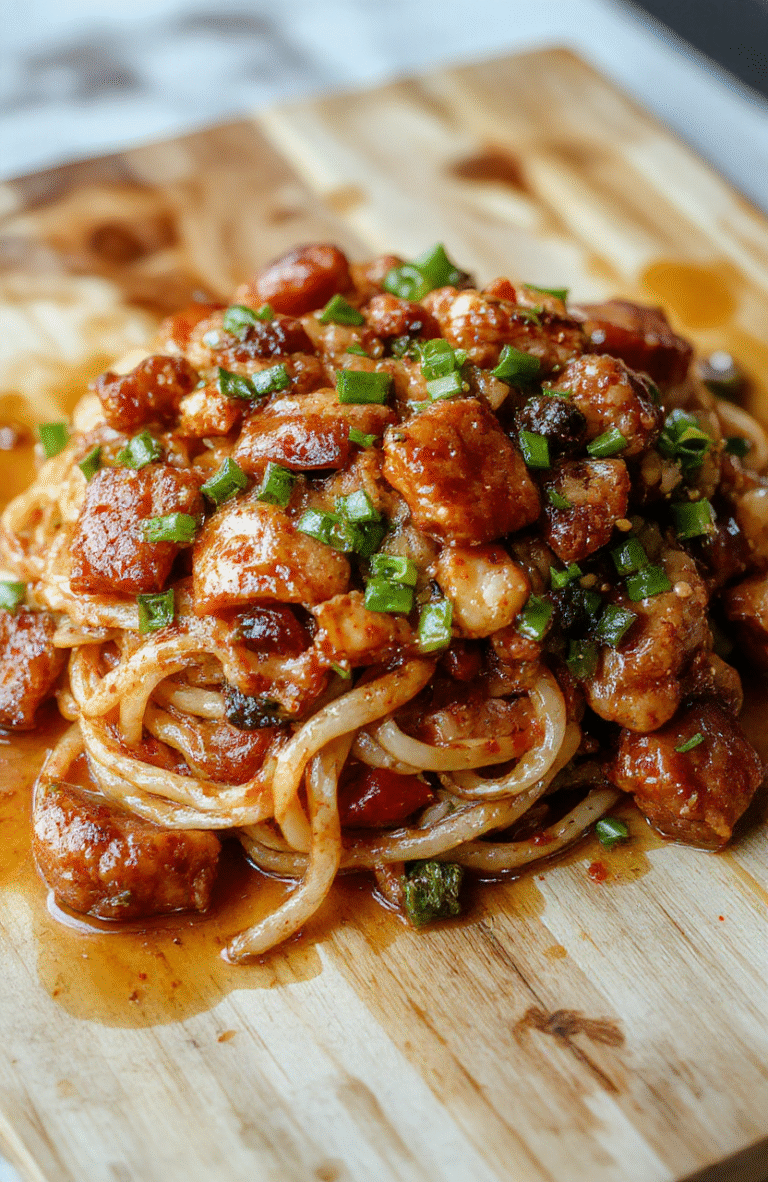
Savory Kung Pao Noodles
A faster, healthier version of the classic Chinese-American favorite—this Kung Pao Noodles recipe delivers bold flavors with less oil and sugar, packed with veggies, lean chicken, and crunchy peanuts.
- Total Time: 25 minutes
- Yield: 4 servings
Ingredients
- 8 oz rice noodles (or lo mein noodles)
- 1 lb boneless, skinless chicken breast, cut into 1-inch cubes
- 2 tbsp soy sauce (divided)
- 1 tbsp Shaoxing wine (or dry sherry)
- 1 tsp cornstarch
- 2 tbsp vegetable oil
- 3 cloves garlic, minced
- 1 tbsp fresh ginger, grated
- 2 red bell peppers, sliced
- 1 cup snap peas or snow peas
- 4–6 dried red chilies, crushed (adjust to spice preference)
- 1/3 cup roasted peanuts
- 2 green onions, sliced
- Sesame seeds for garnish
Instructions
- Cook noodles according to package instructions. Drain and toss with 1 tsp oil to prevent sticking.
- Toss chicken with 1 tbsp soy sauce, Shaoxing wine, and cornstarch. Let marinate 10 minutes.
- Heat 1 tbsp oil in a wok or large skillet over high heat. Stir-fry chicken until golden and cooked through (3–4 minutes). Remove and set aside.
- Add garlic and ginger, sauté 30 seconds until fragrant. Add chilies and stir 15 seconds.
- Add bell peppers and peas. Stir-fry 2–3 minutes until crisp-tender.
- Return chicken to wok. Add cooked noodles and remaining 1 tbsp soy sauce. Toss evenly until well coated (approx. 2 minutes).
- Stir in peanuts and green onions. Taste and adjust seasoning if needed.
- Garnish with extra peanuts, green onions, and sesame seeds before serving.
Notes
- For gluten-free: use tamari instead of soy sauce and verify noodles are GF.
- Vegetarian option: substitute tofu or seitan for chicken.
- Spice level can be adjusted by reducing or omitting dried chilies.
- Best enjoyed fresh—noodles can absorb sauce over time.
- Prep Time: 15 minutes
- Cook Time: 10 minutes
- Method: Stir-Fry
- Cuisine: Chinese
Nutrition
- Serving Size: 1 cup
- Calories: 380 Kcal
- Sugar: 5g
- Sodium: 620mg
- Fat: 12g
- Saturated Fat: 2g
- Unsaturated Fat: 8g
- Trans Fat: 0g
- Carbohydrates: 52g
- Fiber: 4g
- Protein: 24g
- Cholesterol: 60mg